
What's Happening Below the Ice?
We have had a string of freezing temperatures lately, leaving the entire northern section of Lake Champlain completely frozen over! WCAX, a local news station out of Burlington, has been keeping up with temperature and ice conditions on the lake, and they have some pretty fascinating results! They tell us that, so far, this winter has had an average temperature of 22.6 degrees Fahrenheit. Of the 12 winters on record that have held similar average temps, the lake completely froze over 11 of them. This year, Lake Champlain officially froze for the first time since 2019 over on February 14th! Take a look at the National Oceanic and Atmospheric Administration (NOAA) satellite images above to see what changed from January 24th (left) to February 15th (right). For the full story, you can find the WCAX article here.
A frozen lake provides great recreation for skaters and outdoor enthusiasts and beautiful scenery for all winter-lovers. But what happens to all of the plants and animals once the lake freezes? Lake life doesn't just end in the winter; So much is going on under the ice that most of us never get the opportunity to see. The same layer of ice that holds us to skate and fish also provides excellent insulation for the life below, helping to retain heat and push the warmest water to the bottom of the lake.
Water Conditions
As water temperatures drop, the lake begins to separate by density, sending the warmer and more dense water to the bottom. The cooler water at the surface freezes into a layer of ice that provides insulation for the water below, sustaining aquatic life throughout the winter! This ice also prevents oxygen in the water from dissolving into the atmosphere, giving these organisms an even better chance of surviving until spring!
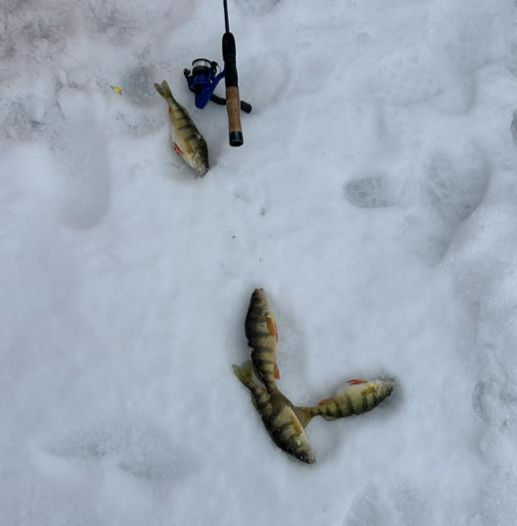
Fish
While most fish aren’t as active in the winter, they definitely don’t disappear! Warmwater fish (like the perch shown above) gather together near the bottom of the lake and away from strong currents, where the water is a little warmer. They often hang out in groups and slow way down, using less energy and needing less food. They stay in this low-energy mode until spring, when the ice melts and the water starts to warm up again. The ice also provides a protection layer from birds and other predators, allowing for a more stable environment during the winter.
Aquatic Plants and Algae
Most native aquatic plants die back during the winter months, when temperatures drop and less sunlight filters through the ice. While the leafy parts of the plants may disappear, their roots remain alive beneath the lakebed. These roots have special adaptations that allow the plants to regrow once the ice melts and warmer temperatures return.
Some invasive species, though, thrive during the years the lake has less ice. Plants that are more adapted to warmer water can easily grow and takeover the native species. Here on Lake Champlain, we are all-too familiar with the issue surrounding blue-green algae in our waters. Here's some good news: cooler water means less productive plant growth, and that includes algae! When the lake freezes, those lower water temperatures can kill off much of the existing algae and help keep growth in check. If the water stays cooler for longer into the season, it can even slow algae growth during the warmer months.
Mammals
Most mammals in Vermont remain active throughout the year. Contrary to popular belief, bears actually don't hibernate; they sleep for longer periods of time to conserve energy until their food resources are available again. Deer travel to deep forests to stay protected from deep snow and high winds. Moose, though, are especially benefitted by the extreme cold. Harsh winters and late-season snowfalls help to kill off larger populations of the winter tick that drives moose populations down.
Amphibians and Reptiles
Creatures like frogs, salamanders, and turtles have a particularly hard time in the winter, as they are not very well adapted for the cold. The individuals that survive tend to burrow in the mud at the bottom of ponds or shallow waters to stay insulated. Some even produce a special chemical that keeps ice crystals from forming in their cells!


Comments